Who Was the Youngest U.S. President?
Quick Answer
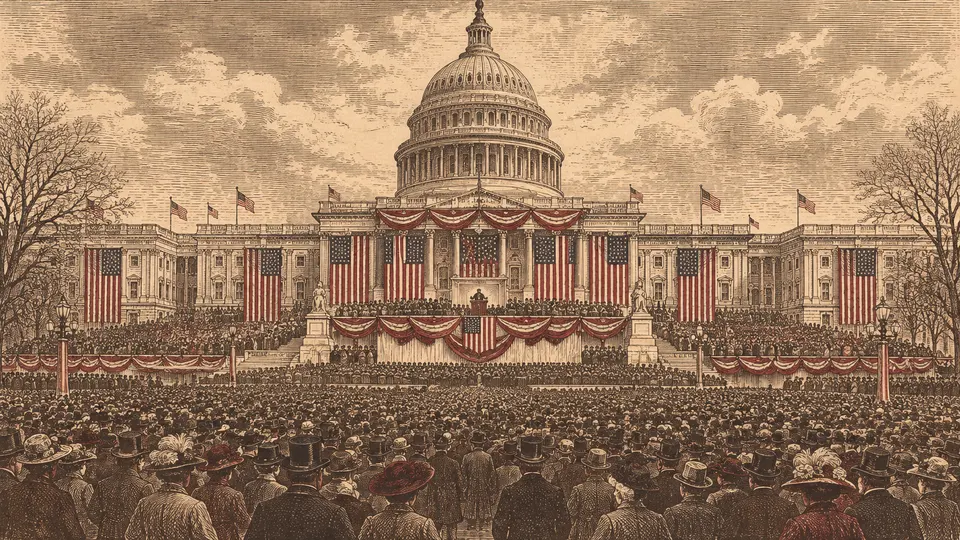
Theodore Roosevelt was the youngest person to become president of the United States. He took the oath on September 14, 1901, at 42 years and 322 days old, after William McKinley died from an assassin's bullet. John F. Kennedy was the youngest ever elected: he was 43 years and 236 days old at his inauguration on January 20, 1961.
On this page
- Who was the youngest president to take office?
- How did Theodore Roosevelt become president in 1901?
- Who was the youngest president ever elected?
- Who are the 10 youngest presidents at inauguration?
- What is the minimum age to be president?
- Why did Roosevelt's succession count as a full presidency?
- Frequently Asked Questions
- Our Take
- Sources
Key Takeaways
- Theodore Roosevelt is the youngest president ever: 42 years, 322 days old when he took office in Buffalo, New York, on September 14, 1901.
- John F. Kennedy is the youngest president ever elected: 43 years, 236 days old at his inauguration on January 20, 1961.
- The two records differ because Roosevelt reached the office by succession, not by winning a presidential election first.
- The Constitution sets the minimum age at 35. No president has come close: Roosevelt was almost 8 years above it.
- Only 9 of the 45 people who have served as president were younger than 50 at their first inauguration (as of November 2026).
Who was the youngest president to take office?
Theodore Roosevelt holds the record. Born on October 27, 1858, he became the 26th president on September 14, 1901, which made him 42 years and 322 days old. The National Archives gives the same figure, noting that Roosevelt was sworn in following the death of President McKinley [3]. The Miller Center describes him as "the youngest person ever to serve" as president [7].
Roosevelt never planned to reach the White House that way. New York party leaders had pushed him onto the 1900 Republican ticket as vice president, partly to keep him from a second term as governor of New York, and the convention nominated him by acclamation [7]. In September 1901, an assassin changed everything.
Theodore Roosevelt is the youngest person ever to serve as president, but he was never elected to the job the first time; he inherited it.
For a full list of who served when, see our guide to all U.S. presidents in order.
How did Theodore Roosevelt become president in 1901?
On September 6, 1901, McKinley was shot at a public reception at the Pan-American Exposition in Buffalo, New York [9]. Gangrene later set in around his wounds. He died at 2:15 a.m. on September 14 [4].
Later that same day, Roosevelt took the oath of office as the 26th president in Buffalo [4]. The ceremony did not happen at the Capitol. It took place in the home of Ansley Wilcox, a friend of Roosevelt's; the house is now the Theodore Roosevelt Inaugural National Historic Site [5]. The Park Service quotes Roosevelt's own reaction: "It is a dreadful thing to come into the Presidency in this way; but it would be far worse to be morbid about it."
Roosevelt then won a full term of his own in 1904, beating Democrat Alton B. Parker by 336 electoral votes to 140 [8]. McKinley was one of four presidents killed in office; our article on presidents who were assassinated covers each case.
Who was the youngest president ever elected?
John F. Kennedy holds that record. Born on May 29, 1917, he was 43 years and 236 days old when he took the oath on January 20, 1961 [3]. The National Park Service states that at 43, Kennedy "became the nation's youngest-elected president" [6].
Kennedy won the election of November 8, 1960, against Vice President Richard M. Nixon, who was 47 at the time. The Miller Center notes that Kennedy faced "two great hurdles" in that race: his youth and his Roman Catholic faith [10]. He won the popular vote by fewer than 120,000 votes.
The gap between the two records is 280 days: Roosevelt was 15,662 days old when he took office, Kennedy 15,942.
Who are the 10 youngest presidents at inauguration?
We computed each president's age at his first inauguration from his birth date and the date he took office, as recorded in our presidents dataset, which we cross-check against the Miller Center. Here are the ten youngest:
| Rank | President | Took office | Born | Age at inauguration | How he took office |
|---|---|---|---|---|---|
| 1 | Theodore Roosevelt | Sep 14, 1901 | Oct 27, 1858 | 42 years, 322 days | Succeeded (McKinley died) |
| 2 | John F. Kennedy | Jan 20, 1961 | May 29, 1917 | 43 years, 236 days | Elected |
| 3 | Bill Clinton | Jan 20, 1993 | Aug 19, 1946 | 46 years, 154 days | Elected |
| 4 | Ulysses S. Grant | Mar 4, 1869 | Apr 27, 1822 | 46 years, 311 days | Elected |
| 5 | Barack Obama | Jan 20, 2009 | Aug 4, 1961 | 47 years, 169 days | Elected |
| 6 | Grover Cleveland | Mar 4, 1885 | Mar 18, 1837 | 47 years, 351 days | Elected |
| 7 | Franklin Pierce | Mar 4, 1853 | Nov 23, 1804 | 48 years, 101 days | Elected |
| 8 | James A. Garfield | Mar 4, 1881 | Nov 19, 1831 | 49 years, 105 days | Elected |
| 9 | James K. Polk | Mar 4, 1845 | Nov 2, 1795 | 49 years, 122 days | Elected |
| 10 | Millard Fillmore | Jul 9, 1850 | Jan 7, 1800 | 50 years, 183 days | Succeeded (Taylor died) |
Bill Clinton is therefore the youngest elected president after Kennedy. Grover Cleveland appears once because the list uses each president's first inauguration; he was much older at his second, nonconsecutive inauguration in 1893.
Young presidents are the exception. Of the 45 people who have held the office, only 9 were under 50 at their first inauguration, as of November 2026. The opposite end of the scale is covered in our article on the oldest president.
How the "youngest president" record changed over time
Only seven presidents have held the record, counting George Washington as the first, based on the same dataset. Each new holder took office younger than everyone before him:
| Year | New record holder | Age at inauguration | Record stood for |
|---|---|---|---|
| 1789 | George Washington | 57 years, 67 days | 48 years |
| 1837 | Martin Van Buren | 54 years, 89 days | 4 years |
| 1841 | John Tyler | 51 years, 6 days | 4 years |
| 1845 | James K. Polk | 49 years, 122 days | 8 years |
| 1853 | Franklin Pierce | 48 years, 101 days | 16 years |
| 1869 | Ulysses S. Grant | 46 years, 311 days | 32 years |
| 1901 | Theodore Roosevelt | 42 years, 322 days | Still standing |
Roosevelt's mark broke Grant's by nearly four years, the biggest single drop in the list. Kennedy came closest to it, but even he fell 280 days short. As of November 2026, the record has lasted 125 years.
What is the minimum age to be president?
The Constitution sets it at 35. Article II, Section 1 says no person is eligible to the office of president "who shall not have attained to the Age of thirty five Years," and also requires a candidate to be a natural born citizen who has been a U.S. resident for fourteen years [1].
The same floor applies to the vice president. The Twelfth Amendment says that no person constitutionally ineligible to be president "shall be eligible to that of Vice-President" [2]. That matters for cases like Roosevelt's: anyone a heartbeat away from the presidency must already meet the age rule.
No president has come close to the constitutional minimum: even Theodore Roosevelt was 7 years and 322 days past his 35th birthday.
Why did Roosevelt's succession count as a full presidency?
In 1901 the Constitution's original text said only that, on the president's death, the powers and duties of the office "shall devolve on the Vice President" [1]. In practice, vice presidents who took over after a death served as full presidents: John Tyler in 1841, Millard Fillmore in 1850 and others did so before Roosevelt. The rule was written out plainly only with the Twenty-fifth Amendment, ratified in 1967, which states: "In case of the removal of the President from office or of his death or resignation, the Vice President shall become President" [2].
So Roosevelt is counted as a full president from September 14, 1901, and his age that day is the one that sets the record. You can follow the other dates that shaped the office on our On This Day pages, or browse every profile in the presidents section.
Frequently Asked Questions
Was JFK the youngest president?
Kennedy was the youngest president ever elected, at 43 years and 236 days old on January 20, 1961. He was not the youngest to serve. Theodore Roosevelt was younger, at 42 years and 322 days, when he succeeded McKinley in 1901 {{cite:national-inaugural-quiz-who-was-the}}.
How old was Theodore Roosevelt when he became president?
He was 42 years and 322 days old. Born on October 27, 1858, he took the oath in Buffalo on September 14, 1901, and turned 43 about six weeks later.
Who was the youngest president of the 20th century?
Theodore Roosevelt, who took office in 1901, was the youngest president of the 20th century and of all time. Among presidents first inaugurated after Kennedy, Bill Clinton was the youngest, at 46 years and 154 days in 1993.
Can someone younger than 35 become president?
No. Article II of the Constitution requires the president to be at least 35 years old, and the Twelfth Amendment applies the same requirement to the vice president {{cite:national-the-constitution-of-the-united}}.
Our Take
We think "youngest president" is really two questions, and most quick answers blur them. Roosevelt is the youngest person to hold the office, but the voters never chose him for it in 1900; they chose him as vice president. Kennedy is the youngest person the country ever elected, after a campaign in which his age was openly treated as a weakness, according to the Miller Center. Both facts are true, and the 280 days between them say a lot about how each man arrived. We also find it telling that, more than two centuries after the age-35 rule was written, no one has come within seven years of it. Our editorial policy explains how we calculate and check figures like these.
Sources
- The Constitution of the United States: A Transcription. National Archives.
- The Constitution: Amendments 11-27. National Archives.
- Inaugural Quiz: Who was the youngest President-elect at the time of his inauguration?. National Archives.
- History and Culture: Theodore Roosevelt Inaugural National Historic Site. National Park Service.
- Frequently Asked Questions: Theodore Roosevelt Inaugural National Historic Site. National Park Service.
- John Fitzgerald Kennedy: The First One Hundred Years. National Park Service.
- Theodore Roosevelt: Life Before the Presidency. Miller Center.
- Theodore Roosevelt: Campaigns and Elections. Miller Center.
- William McKinley: Death of the President. Miller Center.
- John F. Kennedy: Campaigns and Elections. Miller Center.
Where historians disagree, we say so and show the main views. Dates are checked against two sources; legend and documented record are labeled separately. Spotted an error? Tell us.
Keep Reading
Who Was the Oldest U.S. President?
Donald Trump is the oldest president ever inaugurated, Joe Biden the oldest to serve, and Jimmy Carter the longest-lived. Exact ages for every record.
U.S. Presidents in Order: The Complete List
All 47 U.S. presidencies in order, from George Washington in 1789 to Donald Trump in 2025, with term dates, ages and how each presidency came to an end.
How Many Presidents Have Been Assassinated?
Four U.S. presidents were assassinated: Lincoln, Garfield, McKinley and Kennedy. When and where each died, who took over, and how protection changed.