Who Was Andrew Jackson? Life, Presidency and Legacy
Quick Answer
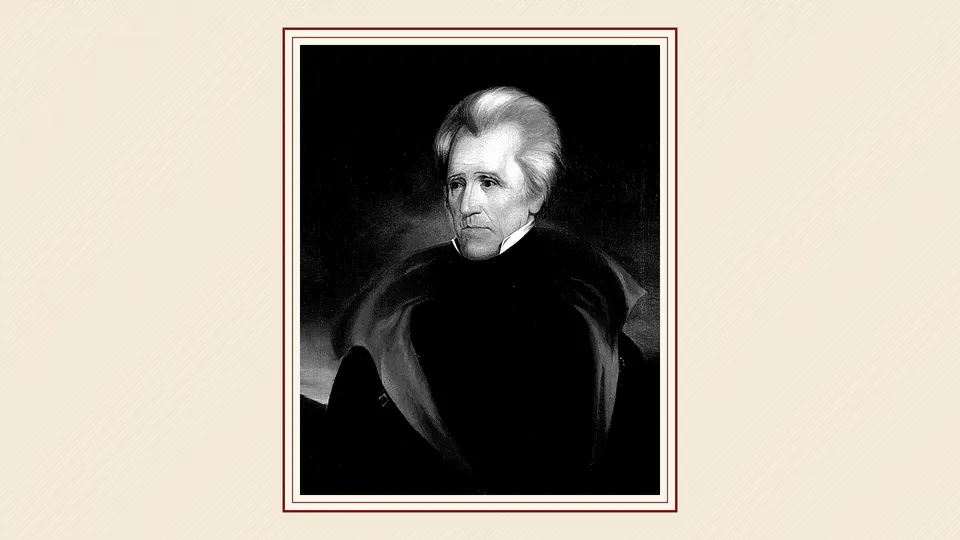
Andrew Jackson was the seventh president of the United States, serving from March 4, 1829, to March 4, 1837. A Tennessee lawyer, planter and general famous for the 1815 Battle of New Orleans, he vetoed the recharter of the national bank, faced down South Carolina's attempt to nullify a federal tariff, and signed the 1830 Indian Removal Act that led to the forced removal of Native nations, including the Cherokee Trail of Tears.
On this page
- How did Andrew Jackson rise from orphan to general?
- How did Andrew Jackson become president?
- What did Andrew Jackson do as president?
- What was the Indian Removal Act, and how did it lead to the Trail of Tears?
- What are the main controversies, and how do historians judge Jackson?
- How did Andrew Jackson die, and what is his legacy?
- Frequently Asked Questions
- Our Take
- Sources
Key Takeaways
- Jackson was born on March 15, 1767, on the North Carolina and South Carolina border and was, in the Miller Center's words, "an orphan and a hardened veteran at the age of fifteen."
- His victory at New Orleans on January 8, 1815, made him a national hero; he lost the 1824 election in the House of Representatives, then won in 1828 and 1832.
- As president he vetoed the Second Bank of the United States recharter in 1832 and rejected South Carolina's nullification of the tariff.
- He signed the Indian Removal Act on May 28, 1830; the Cherokee were forced west in 1838 and 1839, and thousands died.
- Historians remain divided: admirers see a champion of ordinary voters, critics an "American Caesar," and his C-SPAN ranking fell from 13th in 2000 to 22nd in 2021.
How did Andrew Jackson rise from orphan to general?
Jackson was born on March 15, 1767, in the Waxhaw settlement on the border between North and South Carolina; he considered himself a South Carolinian. His father died before he was born [1].
The American Revolution took the rest of his family: his brother Hugh died at Stono Ferry, his brother Robert died after the two were captured in 1781 and caught smallpox, and their mother died while trying to bring nephews home from a British prison ship. The Miller Center sums it up: Jackson was "an orphan and a hardened veteran at the age of fifteen" [1].
Admitted to the bar in 1787, he moved to Nashville in 1788 as a public prosecutor. He married Rachel Donelson Robards formally in 1794, after her divorce; because they had lived together since 1791, opponents later accused him of bigamy. He served as Tennessee's first congressman, a U.S. senator and a state judge, and in 1804 bought The Hermitage, a cotton plantation outside Nashville [1].
His temper was part of his reputation. In 1806 he killed Charles Dickinson in a pistol duel after Dickinson's shot hit him in the chest, and he carried that bullet for life [1].
War made him famous. After the 1813 Fort Mims massacre, he led militia into the Creek homeland and destroyed the main Creek force at Horseshoe Bend in March 1814. On January 8, 1815, his army defeated a British assault at New Orleans: British casualties exceeded 2,000, while American losses were 13 dead and 58 wounded and missing. The Treaty of Ghent had been signed two weeks earlier, so the battle did not change the war's outcome, but it made Jackson a national hero [1]. The battle is one of the events on our January 8 on this day page.
How did Andrew Jackson become president?
Jackson first ran in 1824 and won the most votes without winning the job. He led with 43% of the popular vote and 99 electoral votes, against 84 for John Quincy Adams, 41 for William Crawford and 37 for Henry Clay. With no majority, the House of Representatives decided. Clay backed Adams, Adams won, and Adams then named Clay secretary of state. Jackson called it a "corrupt bargain" [2].
Jackson took 56% of the popular vote and 178 electoral votes to Adams's 83. He was the first president elected from west of the Appalachians and, at the time, the oldest man to take office [2]. He was 61 years and 354 days old on Inauguration Day, a record later broken many times, as our list of the oldest presidents shows. Victory came with grief: Rachel Jackson died on December 22, 1828, weeks after the election.
In 1832 he won again, with 219 electoral votes to 49 for Henry Clay and about 55% of the popular vote. [2].
What did Andrew Jackson do as president?
Jackson cast himself as "the people's tribune" against Congress and special interests, and he expanded the power of the presidency to back that claim [5]. The table below lists the main events of his two terms.
| Year | Event | Why it mattered |
|---|---|---|
| 1829 | Inaugurated on March 4 before a crowd estimated at 15,000 to 20,000 [4] | He was the first president elected from west of the Appalachians |
| 1830 | Signs the Indian Removal Act on May 28 [7] | Authorized removal treaties with Native nations living east of the Mississippi River |
| 1830 | Vetoes the Maysville Road bill on May 27 [3] | Largely halted federal spending on internal improvements such as roads |
| 1832 | Vetoes the recharter of the Second Bank of the United States on July 10 [3] | Opened the "Bank War" against the national bank |
| 1832 | Nullification Proclamation on December 10 [4] | Rejected South Carolina's claim that a state could void a federal law |
| 1833 | Orders federal deposits moved from the bank to state banks [3] | Fired a Treasury secretary who refused; Roger Taney carried it out |
| 1834 | Censured by the Senate on March 28 [4] | The censure was expunged on January 16, 1837 |
| 1836 | Specie Circular on July 11 [4] | Required gold or silver for western land purchases |
The Bank War. After vetoing the bank's recharter and winning reelection, Jackson ordered federal deposits moved to state banks, firing Treasury Secretary William Duane when he refused [3]. The cost came later: state banks, flush with federal money, overextended themselves, and the Panic of 1837 broke just as Jackson left office, starting a depression that lasted into the 1840s.
Nullification. In November 1832 a South Carolina convention declared the federal tariff null and void. Jackson answered with a proclamation in December that warned, "Disunion by armed force is treason." In early 1833 Congress passed both a Compromise Tariff and a Force Bill authorizing military enforcement, and South Carolina rescinded its ordinance against the tariff [3]. Jackson's stand against nullification set a precedent that a state could not simply cancel a federal law. The wider fight over state power and the Union came back a generation later; our article on why the Civil War started follows that story.
The spoils system. Jackson defended removing government officials as "rotation in office," but many posts went to political allies. Senator William L. Marcy put it bluntly in 1832: "to the victor belong the spoils of the enemy." One appointee, Samuel Swartwout of the New York customhouse, fled in 1838 with more than $1 million [3].
What was the Indian Removal Act, and how did it lead to the Trail of Tears?
The Indian Removal Act is the most consequential and most criticized decision of Jackson's presidency. Congress passed it in late May 1830 and Jackson signed it on May 28. It authorized the president to negotiate treaties exchanging the lands of Native nations living east of the Mississippi River, mainly in Georgia, Tennessee, Alabama, Mississippi and North Carolina, for land in the West [7]. In his December 6, 1830, message to Congress, Jackson said removal would "incalculably strengthen the southwestern frontier" and called it "a continuation of the same progressive change by a milder process."
By the end of his presidency nearly 70 removal treaties had been negotiated, and nearly 50,000 eastern Indians had been relocated, according to the National Archives. The National Park Service notes that the Choctaw, Muscogee Creek, Seminole and Chickasaw nations relocated to Indian Territory, in present-day Oklahoma, during the 1830s [8].
The Cherokee Nation fought removal in court. In 1832, in Worcester v. Georgia, the Supreme Court upheld the Cherokees' independence from state authority, but Georgia ignored the ruling [3]. In late 1835 a small faction of Cherokees signed the Treaty of New Echota, and the Senate ratified it in May 1836. Removal began in May 1838, under Jackson's successor Martin Van Buren: U.S. Army troops and state militia "forcibly evicted more than 16,000 Cherokee Indian people from their homelands in Tennessee, Alabama, North Carolina, and Georgia," and the last detachments arrived by the end of March 1839 [8]. Some walked as many as 1,000 miles over about four months [7].
The death toll is not known exactly, and official sources give different figures. The National Park Service says more than a thousand Cherokee died during the journey and an unknown number, "perhaps several thousand," died from the consequences of the forced migration. The National Archives states that approximately 4,000 of 16,000 Cherokees died along the way. Whatever the exact number, the removal Jackson championed cost thousands of Cherokee lives and took the homelands of entire nations.
What are the main controversies, and how do historians judge Jackson?
Three issues dominate the debate: Indian removal, slavery, and the way he used power.
Indian removal. The record above is not in dispute: Jackson pressed for the law, defended it publicly, and the forced removals it set in motion caused thousands of deaths. What historians weigh differently is how central removal should be to his overall reputation. George R. Goethals, a leadership studies professor at the University of Richmond, notes that Jackson fell from 13th in C-SPAN's 2000 Presidential Historians Survey to 22nd in its 2021 survey, the largest drop of any president, and links the decline to his support for Indian removal and the Trail of Tears [9].
Slavery. Jackson was a slaveholding planter. According to History.com, over 66 years he enslaved at least 300 people, and when he died in 1845 he held 150 enslaved people at his estate, the most at any one time [10].
Presidential power. Historian Daniel Feller of the University of Tennessee writes that Jackson "continues to divide historians." To admirers he is "a shining symbol of American accomplishment, the ultimate individualist and democrat." To critics he appears "an incipient tyrant, the closest we have yet come to an American Caesar" [5]. Both sides accept the same facts; they disagree on whether his acts defended the public or concentrated power in one man.
| View | What it emphasizes | Who holds it (per our sources) |
|---|---|---|
| Democratic champion | Rise of the ordinary voter, fight against the bank, defense of the Union | Admirers described by Daniel Feller |
| "American Caesar" | Vetoes, firing of a Treasury secretary, personal style of rule | Critics described by Daniel Feller |
| Removal defines the legacy | Indian Removal Act and Trail of Tears | Reflected in the falling C-SPAN rankings discussed by George R. Goethals |
How did Andrew Jackson die, and what is his legacy?
Jackson retired to The Hermitage in 1837 but stayed active in politics. He advised Martin Van Buren, backed the annexation of Texas, and helped James K. Polk win the 1844 Democratic nomination. He died at The Hermitage on June 8, 1845, "surrounded by family and friends," and was buried in his garden next to Rachel [6]. He was 78.
Jackson widened the role of the presidency and tied it to popular majorities, and he also signed the law that drove Native nations from their homelands. Both facts belong in any honest answer to "what did Andrew Jackson do." To see where he fits among his predecessors and successors, browse our list of all U.S. presidents in order, compare him with Thomas Jefferson and Abraham Lincoln, or explore the Civil War era hub.
Frequently Asked Questions
Why was Andrew Jackson called "Old Hickory"?
His soldiers gave him the name during the War of 1812. When his militia was dismissed far from home at Natchez in 1812 and 1813 without pay or provisions, Jackson shared their hardships on the march back to Tennessee, and the nickname stuck {{cite:miller-jackson-life-before}}.
Was Andrew Jackson president during the Trail of Tears?
No. Jackson signed the Indian Removal Act in 1830 and pursued removal treaties throughout his presidency, but the forced removal of the Cherokee took place in 1838 and 1839 under his successor, Martin Van Buren. It followed the Treaty of New Echota, which was ratified in 1836 while Jackson was still in office.
How old was Andrew Jackson when he became president?
He was 61 years and 354 days old when he took office on March 4, 1829, which made him the oldest president up to that time {{cite:miller-jackson-campaigns}}.
Our Take
We think Andrew Jackson cannot be summed up as either a hero or a villain, and the sources make that hard to avoid. The Miller Center's record shows a president who turned the veto into a weapon, defeated the national bank and held the Union together during the nullification crisis. The National Archives and the National Park Service show, just as clearly, that his removal policy forced tens of thousands of people from their homes and cost thousands of Cherokee lives. In our view, the drop in his C-SPAN ranking reflects historians giving that second record the weight it always deserved, not a rewriting of facts. Our editorial policy explains how we handle disputed legacies.
Sources
- Andrew Jackson: Life Before the Presidency. Miller Center.
- Andrew Jackson: Campaigns and Elections. Miller Center.
- Andrew Jackson: Domestic Affairs. Miller Center.
- Andrew Jackson: Key Events. Miller Center.
- Andrew Jackson: Impact and Legacy. Miller Center.
- Andrew Jackson: Life After the Presidency. Miller Center.
- President Andrew Jackson's Message to Congress 'On Indian Removal' (1830). National Archives.
- History and Culture: Trail of Tears National Historic Trail. National Park Service.
- Presidential greatness is rarely fixed in stone. The Conversation, 2023.
- The Hermitage. History.com, 2018.
Where historians disagree, we say so and show the main views. Dates are checked against two sources; legend and documented record are labeled separately. Spotted an error? Tell us.
Keep Reading
U.S. Presidents in Order: The Complete List
All 47 U.S. presidencies in order, from George Washington in 1789 to Donald Trump in 2025, with term dates, ages and how each presidency came to an end.
Who Was the Oldest U.S. President?
Donald Trump is the oldest president ever inaugurated, Joe Biden the oldest to serve, and Jimmy Carter the longest-lived. Exact ages for every record.
Why Did the Civil War Start?
Why did the Civil War start? What the seceding states said in their own words, the fight over slavery in the West, Lincoln's election, and Fort Sumter.
Who Was Thomas Jefferson? Life, Presidency and Legacy
Thomas Jefferson wrote the Declaration of Independence, bought Louisiana and served as the third president, while enslaving over 600 people. The full record.
Who Was Abraham Lincoln? Life, Presidency and Legacy
Who was Abraham Lincoln? How he rose from a Kentucky log cabin, led the Union through the Civil War, moved to end slavery, and how historians judge him today.
Who Was George Washington? Life, Presidency and Legacy
George Washington led the Continental Army, chaired the Constitutional Convention and was the first U.S. president, 1789 to 1797. His life, record and legacy.