Who Was George Washington? Life, Presidency and Legacy
Quick Answer
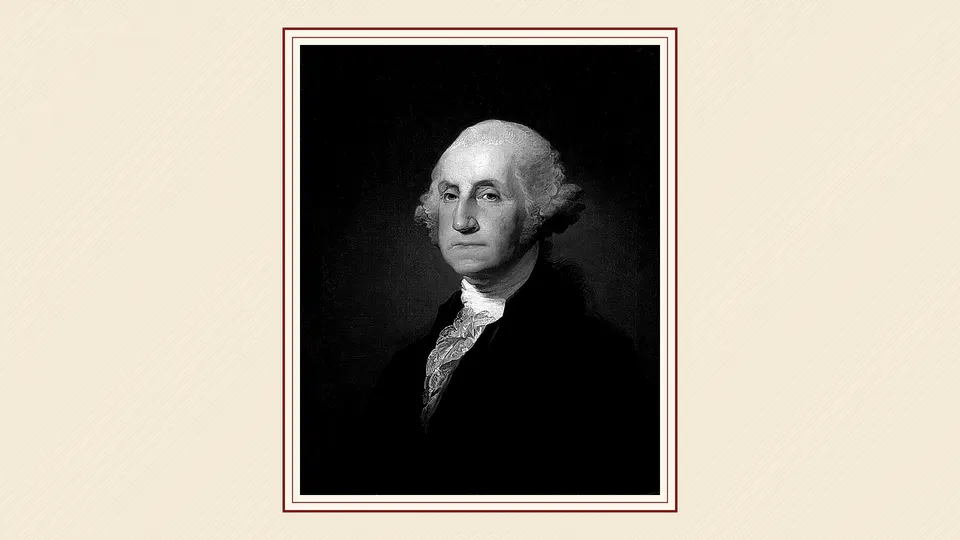
George Washington was a Virginia planter and soldier who commanded the Continental Army in the American Revolution, presided over the 1787 Constitutional Convention and became the first president of the United States. He served two terms, from April 30, 1789, to March 4, 1797, built the first cabinet, kept the young country neutral in a European war and then stepped down voluntarily.
On this page
- How did George Washington go from Virginia planter to commander in chief?
- Why was Washington chosen as the first president?
- What did George Washington do as president?
- What are the controversies, and how do historians judge Washington?
- Where does George Washington rank among presidents?
- How did George Washington die, and what is his legacy?
- Frequently Asked Questions
- Our Take
- Sources
Key Takeaways
- Washington was born on February 22, 1732 (February 11 under the Old Style calendar), and died at Mount Vernon on December 14, 1799, at age 67.
- He won every electoral vote in both of his elections: 69 in 1789 and 132 in 1792.
- As president he signed the bill creating the first national bank, proclaimed neutrality in 1793 and led militia against the Whiskey Rebellion in 1794.
- His two-term retirement became a custom until Franklin D. Roosevelt, and the 22nd Amendment later made it law.
- He enslaved people throughout his life; his will freed the 122 people he owned, after Martha Washington's death.
How did George Washington go from Virginia planter to commander in chief?
Washington grew up in the Virginia gentry, but not at its top. He was born on a tobacco plantation along Popes Creek in Virginia [1]. Britain and its colonies still used the Old Style calendar, so his birth was recorded as February 11; after the switch in September 1752 the date became February 22, 1732, the birthday Americans observe today. His father, Augustine, died when George was eleven [2]. His formal education roughly matched elementary school [3].
Surveying gave him his start. At 17 he received his first official commission, to survey Culpeper County [2]. In 1752 his half-brother Lawrence died, and George leased Mount Vernon from Lawrence's widow [4].
His military career began badly. In 1754 his force attacked a French camp at Jumonville Glen, a clash the Miller Center describes as the start of the Seven Years' War, which Americans usually call the French and Indian War. On July 3, 1754, he surrendered Fort Necessity and signed terms written in French, a language he could not read [2]. In 1755 he served as an aide to General Edward Braddock and fought at the Monongahela, after which he was named commander of the Virginia Regiment. He married the wealthy widow Martha Dandridge Custis on January 6, 1759, and took a seat in the Virginia House of Burgesses that year [4].
By the 1770s Washington had joined the colonial resistance to British rule. He went to the First Continental Congress as a Virginia delegate in 1774. In June 1775, after the fighting at Lexington and Concord, Congress created an army and named him commander in chief [4]. The war that followed was long and often desperate. His Christmas crossing of the Delaware led to victories at Trenton and Princeton [2], and the army's winter camp at Valley Forge in 1777-78 is where, in the words of the National Park Service, it "emerged as a cohesive and disciplined fighting force" [5]. In 1781 the siege of Yorktown by American and French forces brought what the Park Service calls the last battle of the American Revolution [6]. For more on this period, see our colonial America era guide.
In December 1783, at Annapolis, Maryland, Washington handed his commission back to Congress and went home, a general giving up power at the height of his fame. Historian Lindsay M. Chervinsky, writing for the Miller Center, notes that through the whole war "he never challenged civilian authority" [4].
Why was Washington chosen as the first president?
Washington was the one figure trusted across all the states. In May 1787 he went to Philadelphia, where the delegates elected him president of the Constitutional Convention; he attended every session [2]. When New Hampshire became the ninth state to ratify the Constitution on June 21, 1788, the new government could begin, and most Americans expected Washington to lead it [4].
The presidential electors were unanimous: all 69 cast a vote for Washington, and in 1792 he was reelected unanimously with 132 electoral votes. John Adams, the runner-up, received 34 votes in 1789 and 77 in 1792 [7].
He took the oath on April 30, 1789, at Federal Hall on Wall Street in New York City, then the capital. Robert Livingston, chancellor of New York, administered it, and a 13-cannon salute followed [8]. He was 57 years and 67 days old, counted from the birth and term dates the Miller Center lists. You can see where that places him among later presidents in our list of U.S. presidents in order and our guide to the oldest presidents.
What did George Washington do as president?
Washington turned the short outline of Article II into a working government. The table lists the main steps of his two terms with the date each one happened.
| Date | Event | Why it mattered |
|---|---|---|
| Oct. 3, 1789 | Thanksgiving proclamation [11] | Named November 26, 1789, the first national Thanksgiving under the Constitution |
| July 16, 1790 | Establishing the capital [9] | Settled where the permanent capital would be, part of a Hamilton and Madison compromise |
| Feb. 25, 1791 | Signs the bill creating the First National Bank [12] | Backed Hamilton's view of broad federal power over Jefferson's objections |
| Nov. 26, 1791 | First cabinet meeting [12] | Created the advisory body every later president has used |
| Dec. 15, 1791 | Bill of Rights ratified [9] | Completed the amendments Congress proposed on September 25, 1789 [10] |
| April 22, 1793 | Proclaims neutrality [9] | Kept the country out of the war between Britain and France |
| Oct. 1, 1794 | Rides out to meet the militias against the Whiskey Rebellion [12] | Met armed resistance to the federal whiskey tax with state militias |
| Nov. 19, 1794 | Jay Treaty signed with Britain [13] | Preserved peace with Britain at the cost of a bitter public fight |
| Oct. 27, 1795 | Treaty of San Lorenzo with Spain [9] | Opened the Mississippi River and New Orleans to American trade |
| Sept. 19, 1796 | Farewell Address published [4] | Made public his decision to retire after two terms |
Two of these steps defined the government's direction. The first was money. Treasury Secretary Alexander Hamilton wanted a national bank; Secretary of State Thomas Jefferson argued it was unconstitutional. After reading Hamilton's long opinion, Washington signed the bank bill on February 25, 1791 [12]. The split between the two secretaries hardened into political parties, and by 1796 Jefferson and James Madison led the new Democratic-Republican Party. For Jefferson's side of the story, read our profile of Thomas Jefferson.
The second was war in Europe. When Britain and France went to war in 1793, the conflict deepened divisions at home [13]; the French side of that story is told in why the French Revolution started. Washington proclaimed neutrality, and when the French envoy Edmond-Charles Genet ignored it and outfitted privateers in American ports, the administration requested his recall in August 1793, the first time the United States asked a foreign government to recall its minister [14]. The Senate approved the Jay Treaty with Britain on June 24, 1795, by a vote of 20 to 10. The Office of the Historian calls it deeply unpopular but says it helped keep the peace and preserve neutrality [13].
What are the controversies, and how do historians judge Washington?
The documented record includes slavery, frontier war and fierce partisan fights. Historians agree on the facts below; they differ on how much weight each deserves next to his founding role.
Slavery. Washington inherited ten enslaved people when his father died and bought dozens more before his marriage. Martha Washington brought 84 of the 300 enslaved people she owned to Mount Vernon [2]. When he died, more than 300 enslaved people lived at Mount Vernon. His will immediately freed his valet William Lee and arranged freedom for the 122 people he owned after Martha's death; about half of the enslaved community belonged to the Custis estate, which neither George nor Martha had the legal right to free [15]. Chervinsky writes that "much of Washington's lifestyle and personal wealth were dependent on slavery," and that he pursued people who escaped and stayed publicly silent on the issue [16].
The frontier. Washington's administration fought a confederacy of Native nations in the Ohio country. Arthur St. Clair's force of 1,400 men was defeated in November 1791, and Anthony Wayne's army won at Fallen Timbers in the summer of 1794 [12].
Partisanship and retirement. The Jay Treaty set off one of the angriest public debates of the decade, and the Hamilton and Jefferson camps became rival parties under him. Chervinsky also criticizes his last years: "Of the many political choices in his long career, Washington's decisions in retirement were perhaps his worst." She argues that the conditions he demanded when he agreed to lead the army again in 1798 undermined the presidency and civilian control of the military [16].
How historians weigh all this varies. In the admiring view, which Chervinsky also states plainly, "It is impossible to imagine the creation of the United States without him" [4]. A more critical view says rankings still undercount slavery. Howard University historian Edna Greene Medford, an adviser to C-SPAN's survey, said in 2021 that "we still have slaveholding presidents at or near the top of the list" [17]. Both views rest on the same documents; they disagree on how to balance them.
Where does George Washington rank among presidents?
In C-SPAN's 2021 Historians Survey of Presidential Leadership, Washington ranked second of 44 presidents, with 851 points behind Abraham Lincoln's 897. [18] The 2021 survey asked 142 historians and professional observers of the presidency to rate 44 former presidents on 10 qualities of leadership. Abraham Lincoln ranked first in all four surveys (2000, 2009, 2017 and 2021), and Washington, Franklin D. Roosevelt and Theodore Roosevelt kept their places in the top five [17]. You can read about the survey's leader in our profile of Abraham Lincoln.
The ranking reflects the precedents more than any single law. Chervinsky credits him with setting "countless precedents," among them the cabinet, executive privilege, State of the Union addresses and retirement after two terms [4].
How did George Washington die, and what is his legacy?
Washington returned to Mount Vernon on March 15, 1797. On December 12, 1799, after a wet snow, he sat down to dinner without changing his clothes. That night he woke Martha, saying he had trouble breathing. His doctors bled him four times and tried other treatments of the day, none of which helped, and he died between 10 and 11 p.m. on December 14, 1799 [15]. He was 67, and he was buried in the family vault at Mount Vernon [3]. Our pages for December 14 and his birthday, February 22, collect other events from those dates.
Washington's most lasting legacy is the idea that a president hands power back. His retirement after two terms was followed by every successor until Franklin D. Roosevelt, and the 22nd Amendment "made sure that no future president can serve more than two terms" [16]. When he left office, his contemporaries already called him the father of the country.
Frequently Asked Questions
Was George Washington really the first president?
Yes. Washington was the first president under the Constitution. He took the oath of office on April 30, 1789, at Federal Hall in New York City {{cite:national-president-george-washington-s}}.
When is George Washington's birthday?
February 22, 1732. When he was born, Britain and its colonies used the Old Style calendar, so the date was recorded as February 11. After the calendar change in September 1752, his birthday moved to February 22 {{cite:national-george-washington}}.
Did George Washington have children?
He had no children of his own. He married Martha Dandridge Custis, a widow, on January 6, 1759 {{cite:miller-george-washington}}.
How long was George Washington president?
Almost eight years, two full terms, from April 30, 1789, to March 4, 1797. He declined a third term and announced it in his Farewell Address, published on September 19, 1796.
Our Take
We think Washington's most important acts as a leader were two refusals: giving up his army command in 1783 and giving up the presidency in 1797. The sources show a man whose choices built habits the country still relies on, from the cabinet to the peaceful handover of power. They show just as clearly that his wealth and household depended on enslaved people, and that his will freed only the people he legally owned, most of them only after Martha's death. We don't think either fact cancels the other. Readers get the fullest picture by holding both: a founder who set limits on his own power, and a slaveholder whose own freedom was built on other people's lack of it.
Sources
- George Washington. National Park Service, 2025.
- George Washington: Life Before the Presidency. Miller Center.
- George Washington. Miller Center.
- George Washington: Life in Brief. Miller Center.
- History and Culture, Valley Forge National Historical Park. National Park Service.
- History and Culture, Colonial National Historical Park (Yorktown). National Park Service.
- George Washington: Campaigns and Elections. Miller Center.
- President George Washington's First Inaugural Speech. National Archives.
- George Washington: Key Events. Miller Center.
- The Bill of Rights. National Archives.
- Congress Establishes Thanksgiving. National Archives.
- George Washington: Domestic Affairs. Miller Center.
- John Jay's Treaty. Office of the Historian, U.S. Department of State.
- George Washington: Foreign Affairs. Miller Center.
- George Washington: Life After the Presidency. Miller Center.
- George Washington: Impact and Legacy. Miller Center.
- C-SPAN Releases Fourth Historians Survey of Presidential Leadership. C-SPAN, 2021.
- C-SPAN 2021 Survey of Presidential Leadership: Final Scores and Ranks. C-SPAN, 2021.
Where historians disagree, we say so and show the main views. Dates are checked against two sources; legend and documented record are labeled separately. Spotted an error? Tell us.
Keep Reading
Who Was Thomas Jefferson? Life, Presidency and Legacy
Thomas Jefferson wrote the Declaration of Independence, bought Louisiana and served as the third president, while enslaving over 600 people. The full record.
Who Was Abraham Lincoln? Life, Presidency and Legacy
Who was Abraham Lincoln? How he rose from a Kentucky log cabin, led the Union through the Civil War, moved to end slavery, and how historians judge him today.
U.S. Presidents in Order: The Complete List
All 47 U.S. presidencies in order, from George Washington in 1789 to Donald Trump in 2025, with term dates, ages and how each presidency came to an end.
Who Was the Oldest U.S. President?
Donald Trump is the oldest president ever inaugurated, Joe Biden the oldest to serve, and Jimmy Carter the longest-lived. Exact ages for every record.
The History of Thanksgiving: Tradition vs Record
What the 1621 Plymouth harvest really was, what the two eyewitness accounts say, what people ate, and how Hale, Lincoln and FDR made the modern holiday.
Why Did the French Revolution Start?
Why did the French Revolution start? The debt crisis, the three estates, bread prices, the events of 1789, and how historians from Lefebvre to Furet explain it.