Who Was Abraham Lincoln? Life, Presidency and Legacy
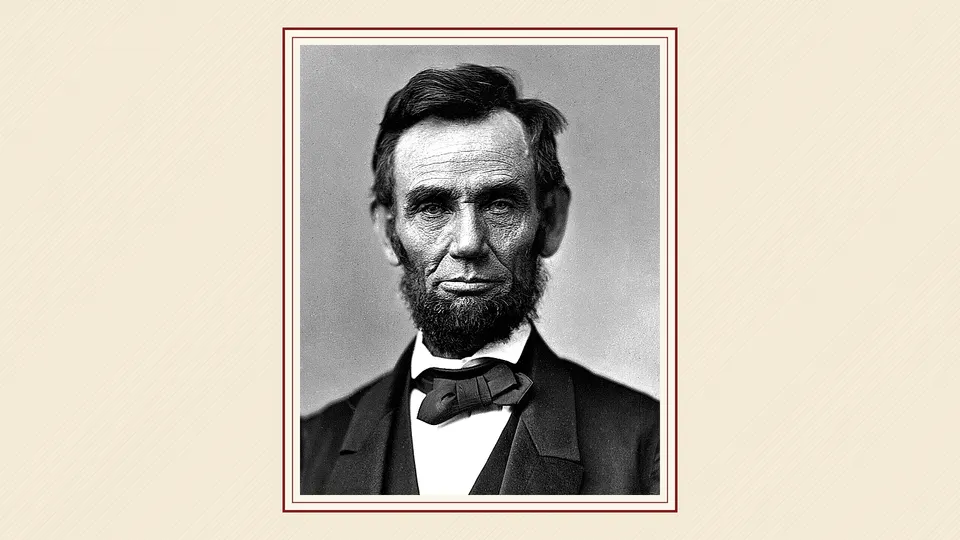
Quick Answer
Abraham Lincoln was the 16th president of the United States, serving from March 4, 1861, until his death on April 15, 1865. He led the Union through the Civil War, issued the Emancipation Proclamation, pushed the 13th Amendment that abolished slavery through Congress, and signed laws on western homesteads, land-grant colleges and a transcontinental railroad. He was assassinated days after the war's main Confederate army surrendered.
On this page
- Where did Abraham Lincoln come from?
- What did Abraham Lincoln do as president?
- How did Lincoln move the country toward ending slavery?
- What are the controversies, and how do historians judge Lincoln?
- Where does Lincoln rank among U.S. presidents?
- How did Lincoln die, and what is his legacy?
- Frequently Asked Questions
- Our Take
- Sources
Key Takeaways
- Lincoln was born in a log cabin in Kentucky on February 12, 1809, and rose through Illinois politics as a self-taught lawyer.
- He won the 1860 election with 180 electoral votes, and Southern states began leaving the Union before he took office.
- The Emancipation Proclamation took effect on January 1, 1863, and the 13th Amendment ended slavery nationwide in December 1865.
- Historians admire his leadership but still debate his wartime limits on civil liberties and his views on race and colonization.
- In C-SPAN's 2021 survey of presidential historians, Lincoln ranked first of all presidents.
Where did Abraham Lincoln come from?
Lincoln was born on February 12, 1809, in a one-room log cabin in Hardin County, Kentucky, to Thomas Lincoln and Nancy Hanks [1]. The family moved to Indiana when he was seven. His mother died when he was nine, and his father later married Sarah Bush Johnston, who became a devoted stepmother. When Lincoln was 21 the family moved again, to Illinois, and in 1831 he settled on his own in the village of New Salem. You can see what else happened on his birthday on our February 12 in history page.
His rise was slow and largely self-made. He volunteered in the Black Hawk War of 1832 and was elected captain of his company, though he saw no combat. Voters sent him to the Illinois legislature four times, in 1834, 1836, 1838 and 1840. He passed the bar exam in 1836, received his law license in 1837, and in 1846 won a seat in the U.S. House as a Whig from Illinois's seventh district [1].
The issue that made him a national figure was slavery's spread into the western territories. In 1858 he ran for the U.S. Senate against Stephen A. Douglas, opening with his "House Divided" speech on June 16 and then meeting Douglas in seven debates. Lincoln lost: the Illinois legislature, which chose senators at the time, picked Douglas by 54 votes to 46. But the debates made him famous across the North [1].
In May 1860 the Republican convention in Chicago nominated him on the third ballot. In a four-way race against Douglas, John C. Breckinridge and John Bell, Lincoln carried every Northern state but one and won a clear majority of electoral votes [2].
What did Abraham Lincoln do as president?
Lincoln's presidency was defined by the Civil War, which began barely five weeks after he took office. The Confederate States had organized on February 7, 1861, a month before his inauguration on March 4, and Confederate forces fired on Fort Sumter on April 12 [4]. For the long road to that moment, see our explainer on why the Civil War started, and for the wider period, our Civil War era hub.
Lincoln's first goal was to save the Union, and over the course of the war he made ending slavery part of that goal. At the same time, Lincoln signed a series of laws on land, railroads, education and banking that outlasted the war. The table below lists the turning points.
| Year | Event | Why it mattered |
|---|---|---|
| 1861 | Fort Sumter is fired on, April 12 [4] | The Civil War begins; on April 15 Lincoln calls for 75,000 militia volunteers |
| 1862 | Homestead Act signed, May 20 [9] | Offered 160 acres of public land to settlers who lived on and farmed it for five years |
| 1862 | Pacific Railway Act approved, July 1 [10] | Funded the first transcontinental railroad, finished at Promontory, Utah, on May 10, 1869 |
| 1862 | Morrill Act passed, July 2 [11] | Gave states federal land to fund colleges of agriculture and the mechanic arts |
| 1863 | Emancipation Proclamation takes effect, January 1 [7] | Declared enslaved people in rebelling states free and opened the Union Army and Navy to Black men |
| 1863 | National Banking Act, February 25 [4] | Created national banks that issued notes backed by U.S. bonds they held |
| 1863 | Gettysburg Address, November 19 [4] | A speech of three short paragraphs at the Gettysburg battlefield, now one of the best-known in U.S. history |
| 1864 | Reelected, November 8 [4] | Gave Lincoln a mandate to finish the war and push the 13th Amendment |
| 1865 | 13th Amendment passes the House, January 31 [8] | Sent the abolition of slavery to the states; ratified December 6, 1865 |
The war also changed how the government paid its bills. Under Treasury Secretary Salmon P. Chase, the Union introduced the first federal income tax and, under the Legal Tender Act of 1862, paper "greenbacks" not backed by gold or silver [3].
Lincoln's reelection was not certain, and he himself expected to lose [6]. In November 1864 he won 55 percent of the popular vote against the Democratic nominee, General George B. McClellan, with Andrew Johnson of Tennessee as his new running mate [2]. He was sworn in for a second term on March 4, 1865, and the main Confederate army under Robert E. Lee surrendered at Appomattox on April 9 [4].
How did Lincoln move the country toward ending slavery?
Lincoln did not start the war as an abolitionist president. As the National Park Service puts it, he began his public career as "antislavery," opposed to slavery's expansion rather than to immediate emancipation, and he "did not publicly call for emancipation throughout his entire life" [14]. Yet he had called slavery a "monstrous injustice" in his Peoria speech of October 16, 1854 [14].
The change came in steps. Lincoln told his cabinet on July 22, 1862, that he intended to issue a proclamation, waited for a Union victory, and announced the preliminary proclamation on September 22, five days after the Battle of Antietam [4]. The final proclamation took effect on January 1, 1863. It declared enslaved people in the rebelling states "forever free," but it did not apply to the loyal border states or to Confederate areas already under Union control, and its promise depended on Union armies winning [7].
The proclamation also opened the Union Army and Navy to Black men, and almost 200,000 Black soldiers and sailors had served by the war's end. [7]. Because the proclamation rested on war powers, Lincoln backed a constitutional amendment to make abolition permanent. The House passed it on January 31, 1865, Lincoln approved it on February 1, and it was ratified on December 6, 1865, eight months after his death [8].
News of freedom did not reach every enslaved person at once. In Texas, Union Maj. Gen. Gordon Granger's General Order No. 3 announced on June 19, 1865, that all enslaved people there were free [12], the day now marked as Juneteenth.
What are the controversies, and how do historians judge Lincoln?
Two parts of Lincoln's record draw the most criticism: his use of executive power and his views on race. On the first, the record is clear. At the start of the war he suspended the writ of habeas corpus by executive order, and between 15,000 and 20,000 people were arrested. After the war, in Ex parte Milligan, the Supreme Court ruled against military trials of civilians where civilian courts were open [3]. Historian Michael Burlingame, writing for the Miller Center, accepts that Lincoln broke laws and set aside constitutional protections but defends these as emergency measures, and calls him "the most activist President in history" [6].
On race, the documents also leave little doubt about what Lincoln said. He first publicly backed colonization, the idea of resettling freed Black Americans outside the country, in 1852. In the fourth debate with Douglas, on September 18, 1858, he said he had never favored "the social and political equality of the white and Black races." In August 1862 he urged a group of free Black men at the White House to support colonization in Central America. After the preliminary proclamation he never mentioned the idea publicly again, and in his last speech, on April 11, 1865, he supported the vote for some Black men, including Union soldiers [16].
Historians disagree about how to read that record. At a 2008 National Archives symposium on Lincoln and emancipation [13], three scholars set out different views:
- A leader who grew. James O. Horton of George Washington University called Lincoln a man "willing and able to change his mind," and pointed to his friendship with Frederick Douglass and the service of Black soldiers as forces that changed his views on race.
- Union first, emancipation later. Frank J. Williams argued that Lincoln's first goal was reuniting the states and that emancipation became a war aim over time. He disagreed with historian Allen Guelzo, who holds that Lincoln meant to issue an emancipation proclamation all along.
- A complicated hero for Black Americans. Edna Greene Medford of Howard University traced how African American views of Lincoln swung from reverence to criticism, noting that Frederick Douglass called him "the black man's president" in 1865 but, by 1876, "emphatically the white man's president." She saw his wartime colonization push as "grasping for straws."
The record shows a politician whose actions against slavery went further than his early words, and historians still argue over how much credit and blame that earns him.
Where does Lincoln rank among U.S. presidents?
Lincoln is usually ranked as the greatest American president. In C-SPAN's 2021 Survey of Presidential Leadership, a poll of historians, he placed first overall with a score of 897, ahead of George Washington (851) and Franklin D. Roosevelt (841). He ranked first in seven of the ten categories, including crisis leadership, moral authority and pursuing equal justice for all [17]. The Miller Center notes that he also topped a 1982 Chicago Tribune poll of 49 historians and political scientists in every category [6].
Even his lowest marks in that survey were high: second in public persuasion, third in international relations and fourth in relations with Congress [17]. Rankings are opinion surveys, not verdicts, but few presidents have held the top spot so consistently. To see where he falls in sequence, with Washington and the rest, see our list of U.S. presidents in order or our profile of George Washington.
How did Lincoln die, and what is his legacy?
Lincoln was shot on the evening of April 14, 1865, at Ford's Theatre in Washington, D.C., five days after Lee's surrender. His attacker was John Wilkes Booth, an actor and Confederate sympathizer [5]. He died at 7:22 a.m. on April 15, 1865, in the Petersen boarding house across the street, at the age of 56 [15]. He was the first of four presidents to be assassinated in office, and Vice President Andrew Johnson took over. After days of official mourning, a funeral train carried his coffin about 1,700 miles to Springfield, Illinois, stopping in 14 cities [5].
Lincoln's reputation grew quickly after his death; within days he was being described as the savior of the Union and the liberator of the enslaved [6]. Burlingame credits him with preserving the Union, ending slavery and redefining the Union around liberty. The broad executive power he used did not outlast him, though. Over the next 40 years, Burlingame writes, Congress and the courts regained much of their influence [6].
Frequently Asked Questions
How old was Abraham Lincoln when he became president?
Lincoln was 52 when he was inaugurated on March 4, 1861, having been born on February 12, 1809. He was 56 when he died on April 15, 1865 {{cite:miller-abraham-lincoln-life-before-the}} {{cite:national-petersen-house}}.
Did the Emancipation Proclamation free all enslaved people?
No. It applied only to states in rebellion against the Union, left slavery untouched in loyal border states, and exempted Confederate areas already under Union control. Slavery ended nationwide only when the 13th Amendment was ratified on December 6, 1865 {{cite:national-13th-amendment-to-the-u}}.
What party was Abraham Lincoln?
Lincoln began his career as a Whig, serving in Congress for that party after his 1846 election, and later joined the new Republican Party, which nominated him for president in 1860 {{cite:miller-abraham-lincoln-campaigns-and}}.
Our Take
We think Lincoln's greatness is easiest to defend when it is described accurately rather than as myth. The record we have cited shows a man who began as an opponent of slavery's spread, not an abolitionist, who backed colonization for years, and who suspended habeas corpus. It also shows a president who, under enormous pressure, freed people in the Confederacy by proclamation, opened the army to Black men and spent his reelection mandate on the 13th Amendment. In our view the historians at the 2008 National Archives symposium were right to treat him as complex: the change in his actions is real, and so are the limits of his views. Remembering both, as Frederick Douglass did, honors him more than a statue does.
Sources
- Abraham Lincoln: Life Before the Presidency. Miller Center, University of Virginia.
- Abraham Lincoln: Campaigns and Elections. Miller Center, University of Virginia.
- Abraham Lincoln: Domestic Affairs. Miller Center, University of Virginia.
- Abraham Lincoln: Key Events. Miller Center, University of Virginia.
- Abraham Lincoln: Death of the President. Miller Center, University of Virginia.
- Abraham Lincoln: Impact and Legacy. Miller Center, University of Virginia.
- The Emancipation Proclamation. National Archives.
- 13th Amendment to the U.S. Constitution: Abolition of Slavery (1865). National Archives.
- Homestead Act (1862). National Archives.
- Pacific Railway Act (1862). National Archives.
- Morrill Act (1862). National Archives.
- National Archives Safeguards Original 'Juneteenth' General Order. National Archives, 2020.
- Lincoln and American Values Symposium: Lincoln and Emancipation (transcript). National Archives, 2008.
- Lincoln on Slavery. National Park Service.
- Petersen House. National Park Service.
- 5 Things You May Not Know About Abraham Lincoln, Slavery and Emancipation. History.com, 2012.
- C-SPAN 2021 Survey of Presidential Leadership: Final Scores and Ranks. C-SPAN, 2021.
Where historians disagree, we say so and show the main views. Dates are checked against two sources; legend and documented record are labeled separately. Spotted an error? Tell us.
Keep Reading
Who Was John F. Kennedy? Life, Presidency and Legacy
John F. Kennedy, the 35th president, led the U.S. through the Cuban Missile Crisis, set the Moon goal and was assassinated in 1963. His life and legacy.
Who Was Theodore Roosevelt? Life, Presidency and Legacy
Theodore Roosevelt, the 26th president, broke up trusts, protected about 230 million acres and won the Nobel Peace Prize. His life, record and legacy.
Who Was Andrew Jackson? Life, Presidency and Legacy
Andrew Jackson, the 7th U.S. president (1829 to 1837), fought the national bank, stopped nullification and signed the Indian Removal Act. His life and legacy.
Who Was Thomas Jefferson? Life, Presidency and Legacy
Thomas Jefferson wrote the Declaration of Independence, bought Louisiana and served as the third president, while enslaving over 600 people. The full record.
Who Was George Washington? Life, Presidency and Legacy
George Washington led the Continental Army, chaired the Constitutional Convention and was the first U.S. president, 1789 to 1797. His life, record and legacy.
Who Was the Oldest U.S. President?
Donald Trump is the oldest president ever inaugurated, Joe Biden the oldest to serve, and Jimmy Carter the longest-lived. Exact ages for every record.