Who Was Theodore Roosevelt? Life, Presidency and Legacy
Quick Answer
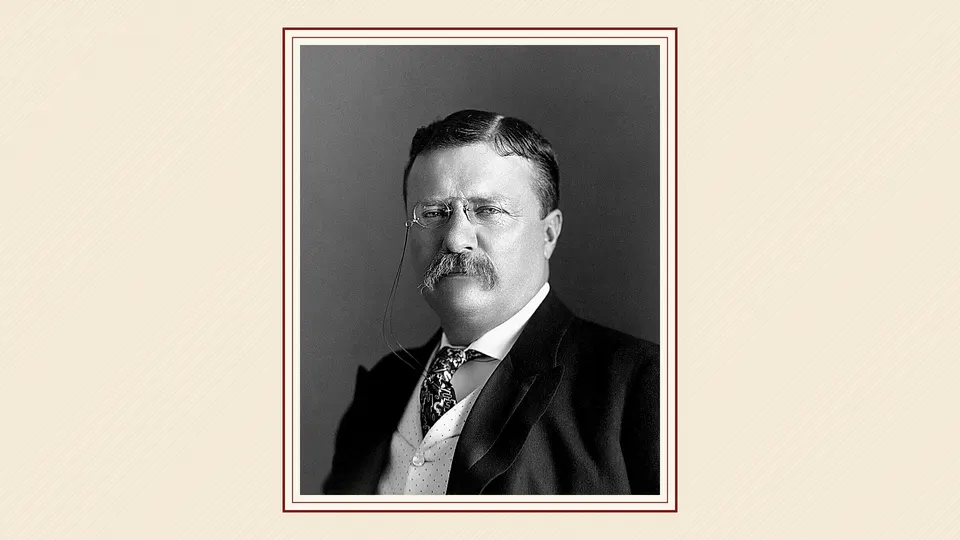
Theodore Roosevelt was the 26th president of the United States, serving from 1901 to 1909. He took office at 42 after William McKinley's assassination, had his Justice Department sue the Northern Securities railroad company, settled the 1902 coal strike, signed the Pure Food and Drug Act, protected about 230 million acres of public land, started the Panama Canal and won the 1906 Nobel Peace Prize.
On this page
- Who was Theodore Roosevelt before he became president?
- How did Theodore Roosevelt become president?
- What did Theodore Roosevelt do as president?
- Why is Theodore Roosevelt called the conservation president?
- What are Roosevelt's controversies, and how do historians judge him?
- What happened after his presidency, and how did he die?
- Frequently Asked Questions
- Our Take
- Sources
Key Takeaways
- Roosevelt became the youngest president ever on September 14, 1901, at 42 years and 322 days old, after McKinley died.
- At home he pushed his "Square Deal": trust lawsuits, a federal role in labor disputes, consumer protection and conservation.
- The National Park Service credits him with protecting about 230 million acres, including 150 national forests and 18 national monuments.
- Abroad he backed Panama's break from Colombia to secure the canal, announced the Roosevelt Corollary and helped end the Russo-Japanese War.
- Historians rank him near the top: C-SPAN's surveys placed him in the top five in 2000, 2009, 2017 and 2021, though his record on race and empire draws sharp criticism.
Who was Theodore Roosevelt before he became president?
Theodore Roosevelt was born in New York City on October 27, 1858 [7]. The Miller Center describes him as "always a sickly child afflicted with asthma". He entered Harvard College in 1876 and married Alice Hathaway Lee in October 1880 [1].
His political career started early. He served in the New York State Assembly from 1882 to 1884. Then came a personal disaster: in February 1884, two days after his wife gave birth to their daughter, his mother died of typhoid fever and his wife died of kidney disease, within a few hours of each other [1].
Roosevelt had first come to the Dakota Badlands in September 1883 [8]. After the losses of 1884 he bought two ranches and a thousand head of cattle, and headed back East in 1886. He then held a run of public jobs: U.S. Civil Service commissioner (reappointed by Grover Cleveland in 1893), president of the New York City Police Board in 1895, and assistant secretary of the Navy under McKinley in 1897 [1].
The war with Spain made him famous. In 1898 he became lieutenant colonel of the First U.S. Volunteer Cavalry, the Rough Riders, and on July 1, 1898, he led a charge up Kettle Hill near Santiago, Cuba, which he called his "crowded hour." He was elected governor of New York the same year [7].
How did Theodore Roosevelt become president?
He was not elected to the job the first time. In 1900 the Republican convention nominated him for vice president by acclamation; the Miller Center notes that New York party leaders pushed him onto the ticket partly to keep him from a second term as governor [1]. On September 6, 1901, McKinley was shot at the Pan-American Exposition in Buffalo. He died early on September 14, and Roosevelt took the oath as the 26th president in Buffalo the same day [9].
He was 42 years and 322 days old, which still makes him the youngest president in U.S. history [10]. McKinley was one of four presidents killed in office; our guide to presidents who were assassinated covers all four. In 1904 Roosevelt won the presidency on his own, beating Democrat Alton B. Parker 336 electoral votes to 140 [4].
Roosevelt reached the White House by accident of succession, then won a full term by a landslide three years later.
What did Theodore Roosevelt do as president?
Roosevelt called the 1902 coal settlement a "square deal," and the phrase became the name of his whole domestic program [2]. The table lists the main actions of his presidency.
| Year | Event | Why it mattered |
|---|---|---|
| 1901 | Invited Booker T. Washington to dine at the White House [2] | Drew harsh criticism in the Southern press; Roosevelt did not apologize |
| 1902 | Justice Department sued the Northern Securities railroad company [2] | In 1904 the Supreme Court ruled for the government and ordered the company dismantled |
| 1902 | Pushed owners and miners in the Pennsylvania anthracite strike to accept a commission [2] | Both sides agreed to abide by the commission's recommendations, ending the coal shortage |
| 1903 | Backed Panama's independence from Colombia, then signed the Hay-Bunau-Varilla Treaty [11] | Gave the United States a 10-mile-wide canal zone; the canal was completed in 1914 |
| 1904 | Announced the Roosevelt Corollary to the Monroe Doctrine [12] | Claimed an "international police power" for the United States in the Western Hemisphere |
| 1905 | Brokered peace talks between Russia and Japan in Portsmouth, New Hampshire [13] | Ended the Russo-Japanese War and earned him the Nobel Peace Prize |
| 1906 | Signed the Pure Food and Drug Act [2] | Part of a consumer protection push that also produced the Meat Inspection Act |
| 1906 | Signed the Antiquities Act on June 8 [8] | Let presidents protect landmarks as national monuments; he proclaimed 18 |
| 1907 to 1909 | Sent 16 battleships, the "Great White Fleet," around the world [3] | The fleet left Hampton Roads, Virginia, in December 1907 and returned in February 1909 |
How did he handle business and labor?
Roosevelt did not oppose big business as such. The Miller Center's assessment says he "never fundamentally challenged the status of big business," treating large companies as a natural stage of economic growth that the government should regulate rather than destroy [6]. His approach was to show that the national government, not corporations, had the final word. The Northern Securities suit and the coal strike settlement both carried that message.
Consumer protection followed the same logic. After Upton Sinclair's novel The Jungle exposed conditions in meatpacking plants, Congress passed the Meat Inspection Act, and Roosevelt also signed the Pure Food and Drug Act of 1906 [2].
What was his foreign policy?
Roosevelt summed up his diplomacy with the maxim "speak softly and carry a big stick" [3]. In November 1903, when Panama declared independence from Colombia, he sent U.S. warships to Panama City and Colón, and Colombian troops could not arrive in time to stop the break [11]. In 1906 he traveled to Panama to see the canal work, becoming the first sitting president to leave the country during his term [3].
Why is Theodore Roosevelt called the conservation president?
Conservation is the part of his record with the largest numbers. The National Park Service credits him with protecting approximately 230 million acres, through 150 national forests, 51 federal bird reserves, 4 national game preserves, 5 national parks and 18 national monuments. He also created the present-day U.S. Forest Service in 1905 [8].
His interest in the West went back to his ranching years in the Dakota Badlands. You can see where his land policy fits in the broader story of the period on our world wars era page.
By the National Park Service's count, Roosevelt protected about 230 million acres of public land, most of it as national forests.
What are Roosevelt's controversies, and how do historians judge him?
The record contains facts that are not in dispute and judgments that are. Keeping them apart helps.
The record. In 1906, after a shooting in Brownsville, Texas, Roosevelt ordered the dishonorable discharge of three companies of Black soldiers, 160 men, without a trial [2]. In Panama, U.S. warships helped a breakaway movement succeed, and U.S. control of the canal later became, in the State Department historians' words, "an irritant to U.S.-Panamanian relations" [11]. The Roosevelt Corollary was later used to justify U.S. interventions in Cuba, Nicaragua, Haiti and the Dominican Republic [12].
The admiring view. Political scientist Sidney Milkis, writing for the Miller Center, calls Roosevelt "widely regarded as the first modern President of the United States," the leader who made the presidency, rather than Congress or the parties, the center of national politics [6]. On this reading, his regulation of business, his use of publicity and his conservation work set patterns that later presidents followed.
The critical view. Other writers stress who paid the costs. Environmental historian Theodore Catton, quoted by HISTORY, argued that "the rise of conservation dovetailed with a national closeout sale on the Indians' landed heritage," and the article ties Roosevelt's land policies to the loss of tribal homelands [15]. Critics also point to Brownsville and to the force used in Panama and the Caribbean as evidence of racial prejudice and imperial ambition.
Where does he rank among presidents?
Historians still place him near the top. C-SPAN's Historians Survey of Presidential Leadership, which in 2021 drew on 142 historians and professional observers, reported that Roosevelt kept his place in the top five in every survey it has run, in 2000, 2009, 2017 and 2021 [14]. In 2021 he ranked fourth overall, with 785 points [16]. Only Abraham Lincoln, George Washington and Franklin D. Roosevelt shared that record with him. Our list of all U.S. presidents in order shows where his term falls.
What happened after his presidency, and how did he die?
After winning in 1904, Roosevelt vowed not to seek another term and backed William Howard Taft in 1908. He later regretted the promise [4]. He sought the Republican nomination in 1912, lost it, and ran as the candidate of the new Progressive Party, nicknamed the "Bull Moose" party after he said he felt "as strong as a Bull Moose." Near the end of the campaign he was shot, and he insisted on finishing a speech "even with an assailant's bullet lodged in his chest." Woodrow Wilson won with 435 electoral votes; Roosevelt took 88 and Taft 8 [4].
Running as a third-party candidate in 1912, Roosevelt won 88 electoral votes, far more than the sitting Republican president, Taft, who won 8.
He and his son Kermit then joined Cândido Rondon's 1913 expedition in Brazil to survey the River of Doubt, which was later renamed the Rio Roosevelt [7]. He caught malaria and suffered a serious leg infection on the trip [5].
During World War I, Roosevelt demanded military preparedness and attacked Wilson's neutrality. When the United States entered the war in 1917, the War Department turned down his offer to raise a volunteer division. All four of his sons served, and his youngest, Quentin, was shot down and killed while flying a mission [5] in July 1918 [7].
Roosevelt died in his sleep at Sagamore Hill, his home in Oyster Bay, New York, on January 6, 1919. He was 60, and the cause was a pulmonary embolism. He is buried at Young's Memorial Cemetery in Oyster Bay. Over his life he wrote about 30 books [7].
Frequently Asked Questions
Was Theodore Roosevelt the youngest president?
Yes. He was 42 years and 322 days old when he took office on September 14, 1901, younger than any other president. John F. Kennedy was the youngest elected president, at 43 {{cite:national-inaugural-quiz-who-was-the}}.
Did Theodore Roosevelt win the Nobel Peace Prize?
Yes. He received the Nobel Peace Prize in 1906 for helping negotiate an end to the Russo-Japanese War, after hosting the peace talks in Portsmouth, New Hampshire, in 1905 {{cite:national-theodore-roosevelt-biography}}.
Why did Theodore Roosevelt run as a third-party candidate in 1912?
He lost the Republican nomination to President Taft, despite winning a series of preferential primaries. His supporters then formed the Progressive Party in Chicago and nominated him, with Hiram Johnson as his running mate {{cite:miller-theodore-roosevelt-campaigns-and}}.
Our Take
We think Roosevelt is best understood as the president who decided that the national government should referee the new industrial economy, and that the president should lead that effort in person. The trust suits, the coal settlement, the food law and the land he protected all follow from that idea, and later presidents built on it. The same confidence had a harder edge. Sending warships to Panama and discharging 160 Black soldiers without a trial were also exercises of a president sure he knew best. Both sides belong in the story, and neither cancels the other. If you read only one thing about him, we would suggest the Miller Center's essays, which set out the record in plain terms. Our editorial policy explains how we separate sourced facts from opinion.
Sources
- Theodore Roosevelt: Life Before the Presidency. Miller Center.
- Theodore Roosevelt: Domestic Affairs. Miller Center.
- Theodore Roosevelt: Foreign Affairs. Miller Center.
- Theodore Roosevelt: Campaigns and Elections. Miller Center.
- Theodore Roosevelt: Life After the Presidency. Miller Center.
- Theodore Roosevelt: Impact and Legacy. Miller Center.
- Theodore Roosevelt Biography. National Park Service.
- Theodore Roosevelt and Conservation. National Park Service.
- History and Culture: Theodore Roosevelt Inaugural National Historic Site. National Park Service.
- Inaugural Quiz: Who was the youngest President-elect at the time of his inauguration?. National Archives.
- Building the Panama Canal. Office of the Historian, U.S. Department of State.
- Theodore Roosevelt's Corollary to the Monroe Doctrine. Office of the Historian, U.S. Department of State.
- The Treaty of Portsmouth and the Russo-Japanese War. Office of the Historian, U.S. Department of State.
- C-SPAN Releases Fourth Historians Survey of Presidential Leadership. C-SPAN, 2021.
- Teddy Roosevelt Championed Conservation Efforts That Also Displaced Native Americans. HISTORY, 2022.
- C-SPAN 2021 Survey of Presidential Leadership: Final Scores and Ranks. C-SPAN, 2021.
Where historians disagree, we say so and show the main views. Dates are checked against two sources; legend and documented record are labeled separately. Spotted an error? Tell us.
Keep Reading
Who Was the Youngest U.S. President?
Theodore Roosevelt was the youngest U.S. president at 42 years, 322 days; John F. Kennedy was the youngest elected. See the ranked list and the age-35 rule.
U.S. Presidents in Order: The Complete List
All 47 U.S. presidencies in order, from George Washington in 1789 to Donald Trump in 2025, with term dates, ages and how each presidency came to an end.
How Many Presidents Have Been Assassinated?
Four U.S. presidents were assassinated: Lincoln, Garfield, McKinley and Kennedy. When and where each died, who took over, and how protection changed.
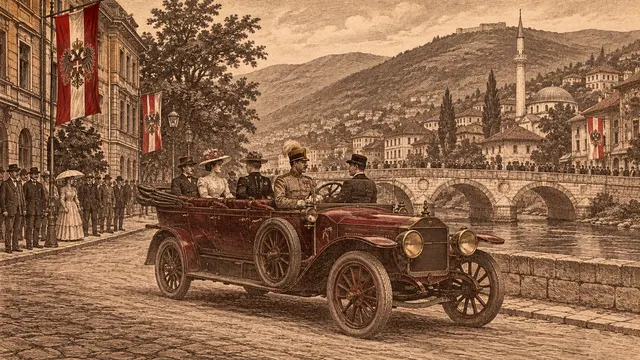
Why Did World War I Start?
Why did WW1 start? The long-term causes, the Sarajevo assassination, the July Crisis day by day, how alliances spread the war, and why the U.S. joined in 1917.
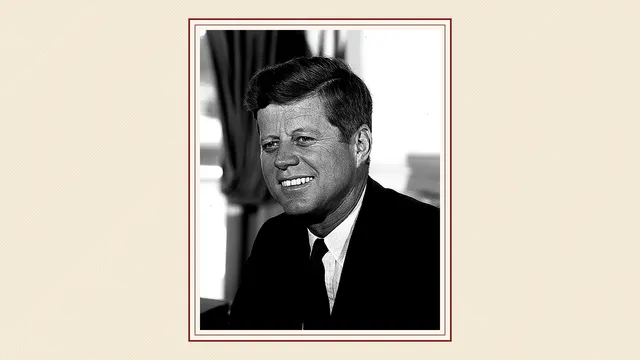
Who Was John F. Kennedy? Life, Presidency and Legacy
John F. Kennedy, the 35th president, led the U.S. through the Cuban Missile Crisis, set the Moon goal and was assassinated in 1963. His life and legacy.
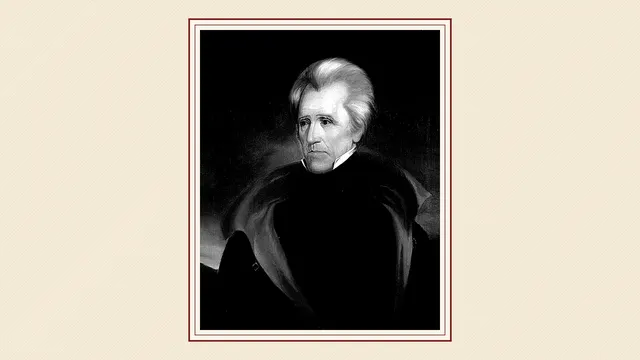
Who Was Andrew Jackson? Life, Presidency and Legacy
Andrew Jackson, the 7th U.S. president (1829 to 1837), fought the national bank, stopped nullification and signed the Indian Removal Act. His life and legacy.