Ronald Reagan: Presidency, Policies and Legacy
Quick Answer
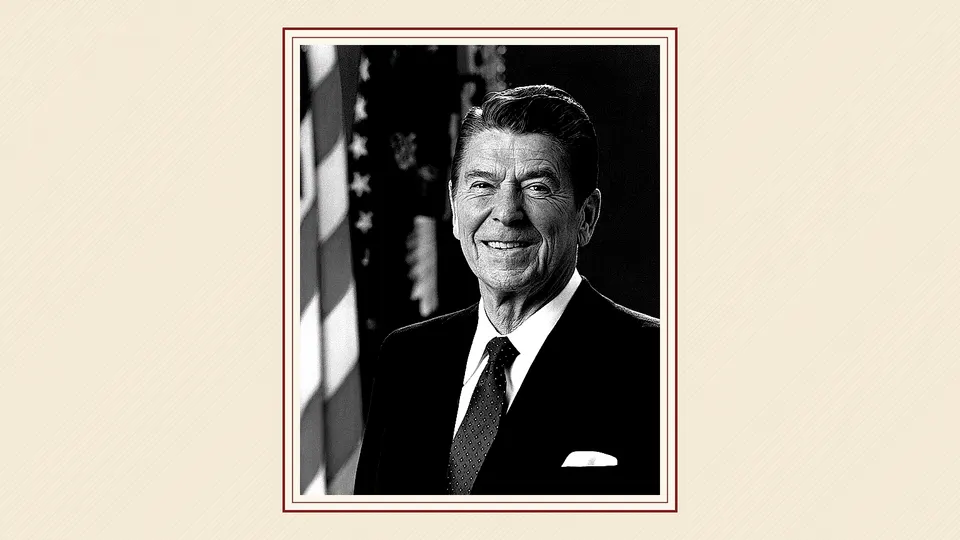
Ronald Reagan (1911-2004) was the 40th president of the United States, serving two terms from January 20, 1981 to January 20, 1989. A former Hollywood actor and governor of California, he cut income tax rates, built up the military, signed a nuclear arms treaty with the Soviet Union and presided over a large rise in the national debt. Historians still debate how much credit or blame he deserves.
On this page
- Who was Ronald Reagan before he became president?
- What did Ronald Reagan do as president?
- How did the economy change under Reagan?
- What was Reagan's role in ending the Cold War?
- What did Reagan do abroad besides the arms talks?
- What were the main criticisms of Reagan?
- How do historians judge Reagan, and how did his life end?
- Frequently Asked Questions
- Our Take
- Sources
Key Takeaways
- Reagan won in 1980 and was re-elected in 1984 with 525 electoral votes, carrying 49 states.
- His biggest domestic acts were large tax cuts in 1981 and a tax overhaul in 1986.
- The 1987 INF Treaty with Mikhail Gorbachev removed a whole class of missiles from Europe.
- The national debt grew from $914 billion to $2.6 trillion during his years in office.
- Iran-Contra was the main scandal; an independent counsel found no credible evidence he knew of the diversion of funds.
Who was Ronald Reagan before he became president?
Reagan was born on February 6, 1911, in Tampico, Illinois, and graduated from Eureka College in 1932 with a degree in economics and sociology [4]. He worked as a radio sports announcer in Iowa, then signed a contract with Warner Bros. in April 1937 and began a film career that would span more than 50 movies [7].
Politics came later. He was elected president of the Screen Actors Guild in March 1947 and served again in 1959 and 1960. From 1954 to 1962 he hosted General Electric Theater on television and spoke for the company. In November 1966 he beat Governor Edmund "Pat" Brown to become governor of California, and he won a second term in 1970 [4].
He won the Republican nomination for president and, on November 4, 1980, defeated President Jimmy Carter in a landslide of 489 electoral votes to 49 [5]. Reagan turned 70 just over two weeks after taking office.
What did Ronald Reagan do as president?
Reagan's presidency is usually summed up in a few big acts: tax cuts, a military buildup, a firm line against the Soviet Union, and later arms talks with it. The table lists the main events, each with a source.
| Year | What happened | Why it mattered |
|---|---|---|
| Mar 30, 1981 | Shot outside a Washington hotel by John Hinckley Jr.; the bullet pierced a lung and narrowly missed his heart [7] | He recovered and returned to work within weeks, which helped his political standing |
| 1981 | Asked Congress to cut marginal tax rates 30 percent over three years; Congress passed a cut of about 25 percent [1] | The largest piece of his economic plan; it also set up the later deficit debate |
| 1981 | Named Sandra Day O'Connor, the first woman on the U.S. Supreme Court [7] | A lasting change to the Court |
| 1981 | Fired nearly 12,000 striking air traffic controllers who defied a back-to-work order [1] | Seen as a turning point for how the federal government handled strikes |
| 1983 | Signed a Social Security rescue plan on April 20, built with a commission led by Alan Greenspan; it slightly raised the retirement age and taxed some benefits for the first time [1] | Kept the program solvent for a generation, according to the Miller Center |
| 1983 | Announced the Strategic Defense Initiative, nicknamed "Star Wars" by critics [2] | Became a sticking point in later talks with the Soviets |
| 1986 | Signed the Tax Reform Act in October, lowering rates while closing loopholes [1] | Simplified the tax code, though it did not much reduce the deficit |
| 1987 | Signed the INF Treaty with Gorbachev in December [2] | The first Cold War pact to actually shrink nuclear arsenals |
How did the economy change under Reagan?
When Reagan took office, the top federal income tax rate was 70 percent. By the time he left it was 28 percent [1]. The economy shrank 2.5 percent in 1982, during a recession, then grew 3.6 percent in 1983 and 6.8 percent in 1984. Unemployment peaked at 11 percent, then fell to 7.4 percent in 1984 and 5.2 percent by 1989 [1].
Supporters credit the tax cuts and tight interest rates with a record peacetime stretch of growth. The Miller Center essay by Reagan biographer Lou Cannon also quotes economist Robert Samuelson, who argues that Reagan's main economic achievement was backing the Federal Reserve under Alan Greenspan so inflation stayed low [3].
Critics point to the other side of the ledger: the budget deficit was $113 billion in 1982 and never fell below $153 billion from 1983 to 1989. It topped $221 billion in 1986, and the national debt rose from $914 billion to $2.6 trillion, while yearly interest payments grew from $71 billion to $150 billion [1]. The supply-side tax cuts did not bring in the extra revenue Reagan had predicted. Defenders answer that rising military spending drove much of the deficit [3].
What was Reagan's role in ending the Cold War?
Reagan first took a hard line. In a March 8, 1983 speech he called the Soviet Union an "evil empire," and later that month he announced the Strategic Defense Initiative. Then relations changed after Mikhail Gorbachev came to power. The two men met four times: Geneva in November 1985, Reykjavik in October 1986, Washington in December 1987 and Moscow in June 1988 [2].
The Reykjavik talks broke down over SDI, but the Miller Center says the aftermath proved a breakthrough. In December 1987 they signed the INF Treaty, which removed intermediate-range nuclear missiles from Europe and called for destroying more than 2,600 Soviet and American weapons [2]. On June 12, 1987, Reagan stood in front of the Brandenburg Gate in West Berlin, about 100 yards from the Berlin Wall, and said, "Mr. Gorbachev, tear down this wall!" [8]. The wall came down after East Germany opened its border on November 9, 1989, ten months after he left office; our article on why the Berlin Wall fell covers that story, and why the Cold War started covers the background.
Did Reagan "win" the Cold War? Reagan's partisans say so, but Reagan and Gorbachev themselves said the whole world was a winner. Historians have no consensus on the causes. Lou Cannon lists the U.S. buildup, SDI, pressure from Eastern Europe (especially Poland), Soviet overreach in Afghanistan and the collapse of the Soviet economy, and concludes that Reagan and his policies contributed to the outcome [3]. For more context, see our Cold War era hub and the Cuban Missile Crisis under an earlier president, John F. Kennedy.
What did Reagan do abroad besides the arms talks?
In October 1983, after Marxist leader Maurice Bishop was murdered in Grenada, U.S. forces intervened, freed American medical students and subdued Cuban forces on the island within days. On October 23, 1983, a terrorist attack on the Marine barracks in Beirut killed 241 U.S. servicemen, and Reagan called it "the saddest day of my presidency." U.S. forces left Lebanon in February 1984. In 1986, about 200 U.S. aircraft struck targets in Libya, and 37 people died [2].
What were the main criticisms of Reagan?
Three come up most often. The first is the deficit and debt covered above. The second is Iran-Contra. Reagan approved arms sales to Iran on December 7, 1985, and when the news broke in November 1986 it became the biggest scandal of his presidency. On March 4, 1987, he took "full responsibility." Independent counsel Lawrence Walsh's final report, dated August 5, 1993, found no credible evidence that Reagan knew of the diversion of funds to the Contras [2].
The third is AIDS. By 1985, nearly 4,000 Americans had died of the disease, and by 1989 the CDC reported more than 46,000 deaths. Surgeon General C. Everett Koop issued a prevention report in October 1986, and federal spending on AIDS research and prevention reached $2.3 billion a year by 1989. Reagan gave a speech on the disease on May 31, 1987, which critics on the left called too little, too late [1].
How do historians judge Reagan, and how did his life end?
The Miller Center calls his economic legacy "mixed." Cannon calls him "a master politician" who expanded his party's reach, pointing to his 49-state re-election victory [3]. In 1984 he won 525 electoral votes to Walter Mondale's 13 [6]. Republicans gained control of the Senate when he won in 1980, though Democrats held the House all eight years; Republicans did not win it until 1994 [3].
Admirers and doubters both appear in that same essay. British Prime Minister Margaret Thatcher wrote that Reagan "achieved the most difficult of all political tasks," which she described as changing attitudes about what was possible. Cannon adds that the number of democratic nations and the spread of free-market ideas grew during Reagan's time in office. But he also asks whether Reagan's advances will last, pointing to Russia's later autocratic path, and he leaves open whether his accomplishments came from his philosophy, despite it, or both [3]. In short, the record is not a simple win or a simple failure, and readers should expect sources on the left and right to stress different parts of it.
In November 1994 Reagan announced in a handwritten letter that he had Alzheimer's disease. He died on June 5, 2004, at his Los Angeles home, aged 93, and was buried on the grounds of his presidential library [7]. For how he fits among the others, see U.S. presidents in order, the presidents hub and the list of presidents who were shot.
Frequently Asked Questions
Was Ronald Reagan an actor?
Yes. Warner Bros. signed him in 1937, and he appeared in more than 50 films over about three decades, including Knute Rockne, All American and Kings Row [7].
What was Iran-Contra?
It was a scandal over secret U.S. arms sales to Iran and the diversion of money to the Contras. It became public in November 1986, and Reagan took "full responsibility" in March 1987 [2].
How many states did Reagan win in 1984?
He won 49 states and 525 electoral votes. Walter Mondale carried only Minnesota and the District of Columbia [6].
Our Take
We think the fairest reading of Reagan is a split one. The sources show real results he can claim: lower inflation and unemployment by the late 1980s, a simpler tax code and the first treaty that cut nuclear weapons. They also show costs he cannot dodge: record deficits, a scandal that engulfed his White House and a slow public response to AIDS. On the Cold War, we would not say he "won" it alone, because the historians cited above name several causes. Reagan's own version of the story, that the whole world won, may be the most accurate. Readers will weigh these items differently depending on their politics, and that is fine.
Sources
- Ronald Reagan: Domestic Affairs. Miller Center, University of Virginia.
- Ronald Reagan: Foreign Affairs. Miller Center, University of Virginia.
- Ronald Reagan: Impact and Legacy. Miller Center, University of Virginia.
- Reagan's Pre-Presidential Biographical Sketch Timeline. Ronald Reagan Presidential Library.
- 1980 Electoral College Results. National Archives.
- 1984 Electoral College Results. National Archives.
- Ronald Reagan. HISTORY.
- Reagan Tear Down This Wall Speech. HISTORY.
Where historians disagree, we say so and show the main views. Dates are checked against two sources; legend and documented record are labeled separately. Spotted an error? Tell us.
Keep Reading
U.S. Presidents in Order: The Complete List
All 47 U.S. presidencies in order, from George Washington in 1789 to Donald Trump in 2025, with term dates, ages and how each presidency came to an end.
Who Was John F. Kennedy? Life, Presidency and Legacy
John F. Kennedy, the 35th president, led the U.S. through the Cuban Missile Crisis, set the Moon goal and was assassinated in 1963. His life and legacy.
Why Did the Berlin Wall Fall?
Why did the Berlin Wall fall in 1989? Gorbachev's reforms, the East German exodus and protests, a botched press conference and Western pressure, explained.
Why Did the Cold War Start?
Why did the Cold War start? How the U.S.-Soviet alliance broke down from Yalta and Potsdam to the Truman Doctrine, Berlin Airlift, NATO and the Soviet bomb.
Who Was Theodore Roosevelt? Life, Presidency and Legacy
Theodore Roosevelt, the 26th president, broke up trusts, protected about 230 million acres and won the Nobel Peace Prize. His life, record and legacy.
Who Was Andrew Jackson? Life, Presidency and Legacy
Andrew Jackson, the 7th U.S. president (1829 to 1837), fought the national bank, stopped nullification and signed the Indian Removal Act. His life and legacy.